

Security
The Rise of AI-Powered Phishing Attacks in 2026
Author
David Thorne
The New Era of Social Engineering
As we navigate through 2026, the cybersecurity landscape has been fundamentally altered by the democratization of Large Language Models (LLMs). Phishing, once characterized by poor grammar and obvious red flags, has evolved into a highly sophisticated, AI-driven enterprise. Attackers no longer blast generic emails to millions; they deploy autonomous agents that craft hyper-personalized lures based on real-time data scraping and social media footprinting.
Beyond the Human Eye
Modern AI-powered phishing attacks are indistinguishable from legitimate corporate communications. By analyzing a company’s public-facing documentation, an AI can mimic the exact tone, vocabulary, and internal formatting of a specific department. In 2026, "perfect" English is the baseline, not the exception.
Sophisticated Tactics in 2026
Context-Aware Spear Phishing: AI agents monitor public project updates or LinkedIn transitions to send "relevant" documents that bypass traditional email filters.
Deepfake Audio/Video Synthesis: Attackers use 15-second voice samples from public webinars to authorize fraudulent wire transfers via "vishing" (voice phishing).
Polymorphic Phishing URLs: Links that detect if they are being opened by a security sandbox and show harmless content, only revealing the malicious payload to a real user.
Automated Reconnaissance: Bots that identify high-value targets within an organization and map their professional relationships to find the path of least resistance.
"The challenge of 2026 is no longer teaching employees what to look for, but building systems that detect what the human eye cannot see."
Sentinel’s Behavioral Defense
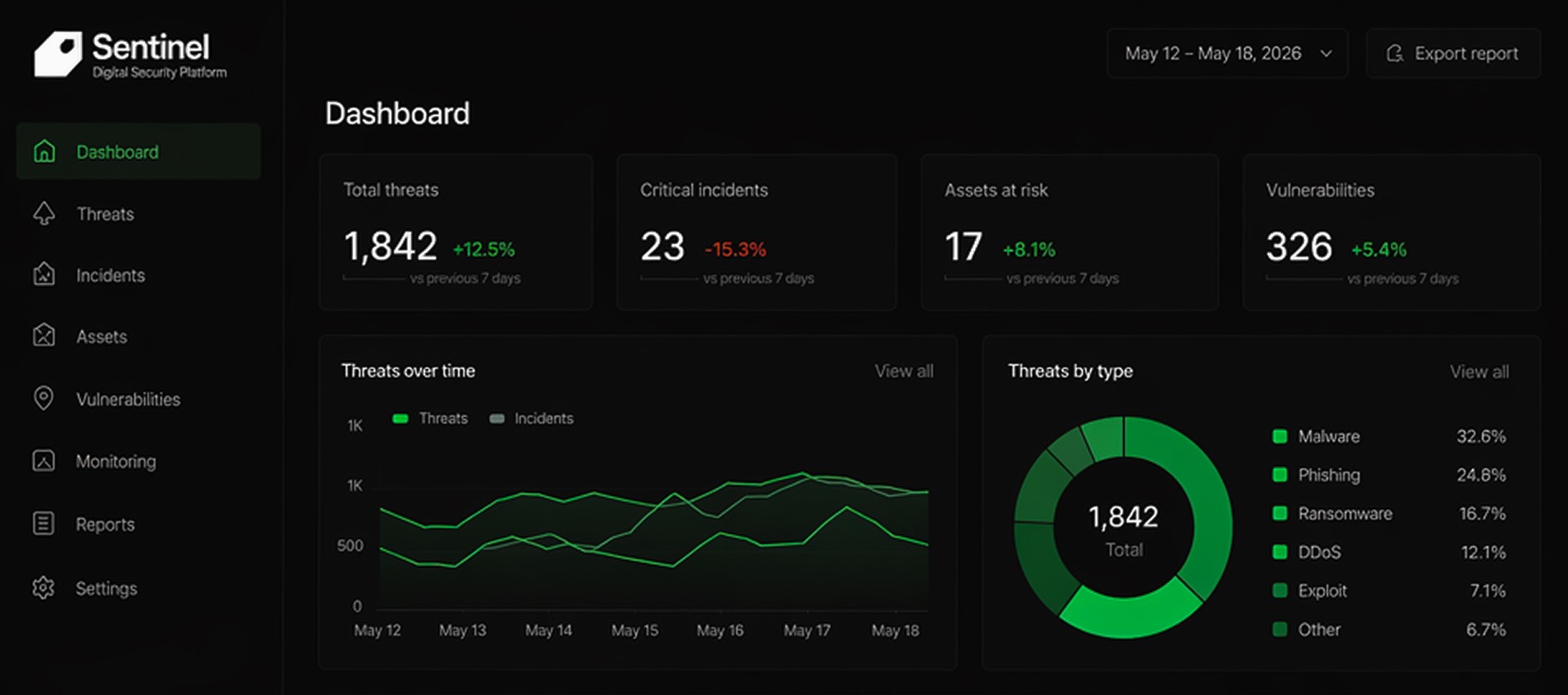
To counter AI-driven threats, security must also be AI-driven. Sentinel’s platform moves beyond signature-based detection. Our behavioral engine analyzes the intent of incoming communication, flagging anomalous patterns in delivery timing, sender-recipient relationship history, and link behavior.
Building a Resilient Workforce
Technology alone is not a silver bullet. We recommend a "Zero-Trust Communication" policy where any request involving sensitive data or financial transactions must be verified through a secondary, out-of-band channel. By combining Sentinel’s predictive monitoring with rigorous internal protocols, organizations can effectively neutralize the threat of AI-driven deception.
Share: